
The Retail Energy Code explained
Jump to: What is the REC | Who is involved | What REC covers | How the REC is managed | How it works | Governance
What is the REC?
The REC is a shared set of rules that energy organisations follow to operate within the retail energy market.
Energy companies are required to become parties to the REC and comply with its requirements.
It helps to:
- Ensure the market operates effectively and improves over time
- Protect customers and their data
- Enable efficient switching between suppliers
- Support essential systems and infrastructure
The REC covers a wide range of activities, including switching, metering, data management, and theft prevention.


Who is involved?
A range of organisations participate in and support the REC.
- Energy Suppliers: Companies that supply gas and/or electricity to domestic or business customers.
- Network Operators: Companies responsible for gas and/or electricity distribution networks.
- Metering Equipment Managers: Organisations responsible for installing, maintaining, and managing metering equipment.
- Service Providers: Companies delivering services such as data enquiry services and market systems.
- Central Switching Service provider: Responsible for managing gas and electricity switching and registration data.
- Regulator (Ofgem): Oversees the market to ensure it works in the interests of consumers.
- RECCo (Retail Energy Code Company): Ensures the REC is implemented and managed effectively.
What does the REC cover?
The REC supports the systems and processes needed to run the retail energy market.
It includes:
- Switching suppliers: Ensuring customers can move between suppliers quickly and reliably
- Metering systems: Installation, maintenance, and operation of metering equipment
- Data management: Secure handling and sharing of market data
- Issue resolution: Handling billing, switching, and operational issues
- Theft detection and prevention: Supporting the identification and reduction of energy theft


How the REC is managed
RECCo is appointed as the licensed Code Manager for the Retail Energy Code.
The Code Manager is responsible for:
- Support REC parties and stakeholders
- Manage changes to the REC
- Monitor performance and compliance
- Provide governance and committee support
RECCo oversees the REC and ensures it is effectively delivered.
How it works
The REC provides a structured way for organisations to operate and improve the retail energy market over time.
1. Join the REC: Organisations become REC parties and follow the rules and processes set out in the code.
2. Operate using shared systems: Common systems support key activities such as switching, metering, and data exchange.
3. Identify issues and improvements: Participants raise issues or suggest changes based on market needs.
4. Assess and review changes: Changes are developed and reviewed through a structured process supported by the Code Manager.
5. Make decisions through governance: Committees and panels evaluate changes to ensure they work for the market.
6. Implement improvements: Approved changes are delivered into the market.

Governance
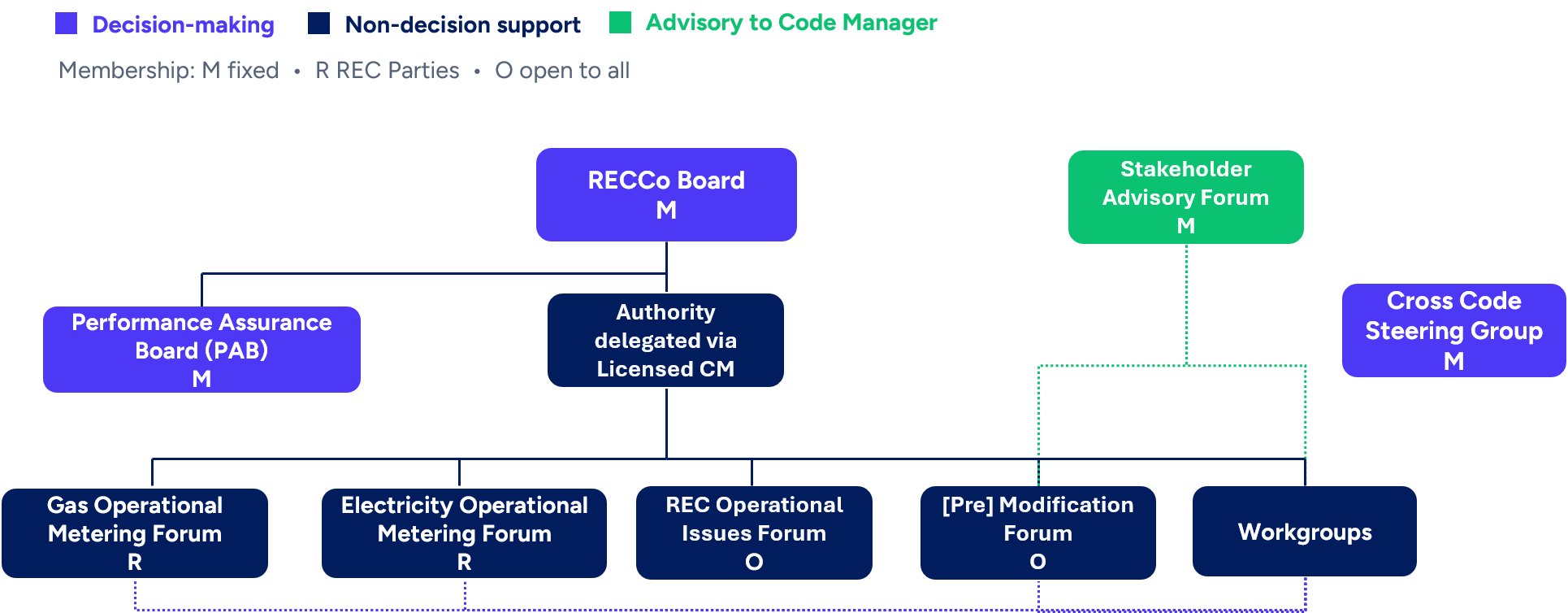
The REC is governed by committees and expert groups that review changes, monitor performance, and make decisions about how the market operates. For more detail, visit Committees.
The structure below shows how these groups are organised and how decisions flow through the REC.